

Order Management Software Built for Operational Complexity
If you manage:
- Inventory shared across online, phone, wholesale, or marketplace channels
- Complex pricing, promotions, or customer rules
- Backorders, partial shipments, or split orders
- Inventory shared across fulfillment locations
then an OMS becomes essential — and Ability OMS was built specifically for this level of complexity.
Unlike entry-level platforms that focus primarily on storefront and checkout, Ability OMS focuses on the operational layer of commerce: ensuring inventory accuracy, order integrity, and financial alignment as your business scales.
Got Big OMS Pain Points?
Why OMS Matters in an AI-First World?
Signs You’ve Outgrown Shopify
Signs You’ve Outgrown BigCommerce
Empowering Your Multi-Channel Retail Business
Ability OMS provides a centralized platform that supports:
- Multiple sales channels (web, phone, wholesale, marketplaces
- Shared inventory across locations
- Flexible fulfillment workflows
- Real-time visibility for operations and customer service teams
This unified approach allows retailers to scale without sacrificing control or accuracy.
Support Phone, Catalog, and Mail Orders
with Ability OMS
Many retailers continue to generate revenue through customer service teams, call centers, catalog programs, fundraising campaigns, and direct sales channels. These transactions—commonly referred to as Mail Order/Telephone Order (MOTO) transactions—require secure payment processing and efficient order management when the customer is not physically present.
Ability OMS allows retailers to manage MOTO transactions alongside ecommerce, marketplace, wholesale, and retail store orders within a single platform.
Customer service teams can:
- Create and manage telephone orders
- Process secure card-not-present transactions
- Access customer and order history
- Apply promotions, discounts, and source codes
- Check inventory availability in real time
- Manage backorders and fulfillment workflows
- Maintain complete customer visibility across channels
One OMS for Every Order Channel
Whether orders originate from your website, marketplace, retail store, catalog, or call center, Ability OMS centralizes order processing, inventory visibility, and customer data in one system.
This helps retailers:
- Improve customer service
- Reduce manual processes
- Maintain inventory accuracy
- Streamline payment and fulfillment workflows
- Deliver a consistent customer experience across every channel
Ability OMS provides real-time inventory visibility across warehouses, stores, and virtual locations. Inventory can be allocated, reserved, backordered, or released based on configurable business rules — preventing overselling and improving fulfillment reliability.
By tightly linking inventory availability to order processing, Ability OMS ensures confident selling across all channels.
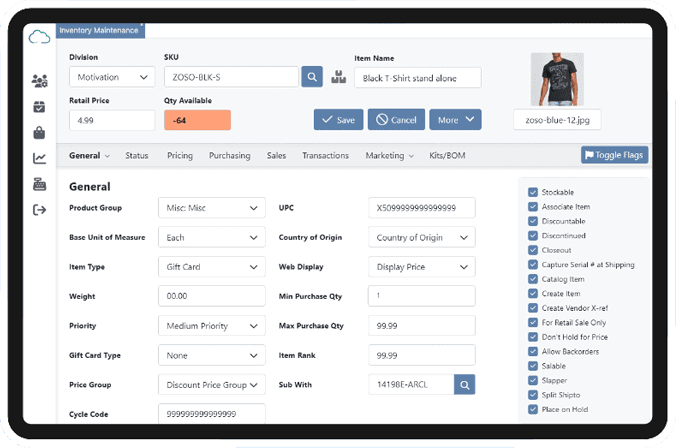
Ability OMS supports multiple fulfillment locations and centralized inventory visibility, enabling orders to be processed, split, or partially shipped based on inventory availability and business rules. Pick, pack, and ship workflows are integrated directly into the OMS, reducing manual handoffs and errors.
This ensures faster fulfillment, fewer exceptions, and greater operational consistency.
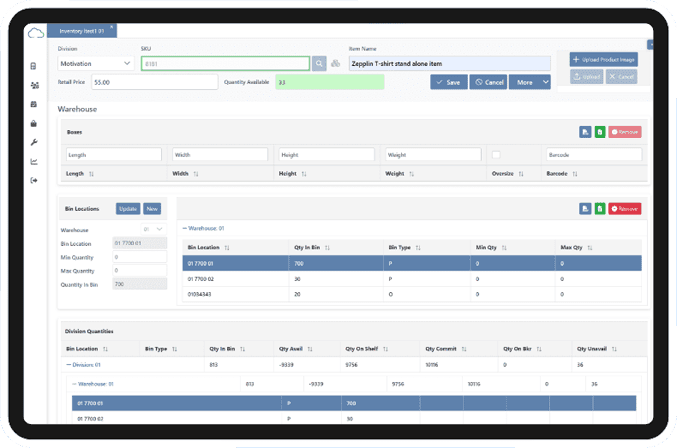
Ability OMS is designed to handle complex order scenarios, including:
- Split shipments across locations
- Partial fulfillment and backorders
- Custom pricing and promotions
- Returns, exchanges, and adjustments
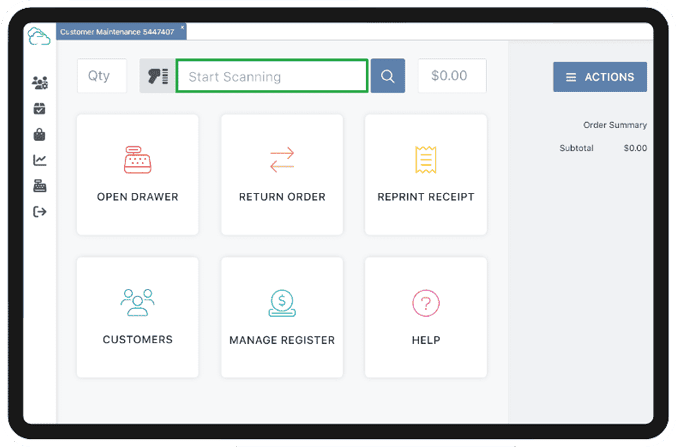
Ability OMS provides a centralized view of customer history, order status, payments, and fulfillment activity. This allows customer service teams to answer questions quickly, resolve issues efficiently, and maintain consistent communication across channels.
The result is fewer escalations, faster resolution, and stronger customer trust.
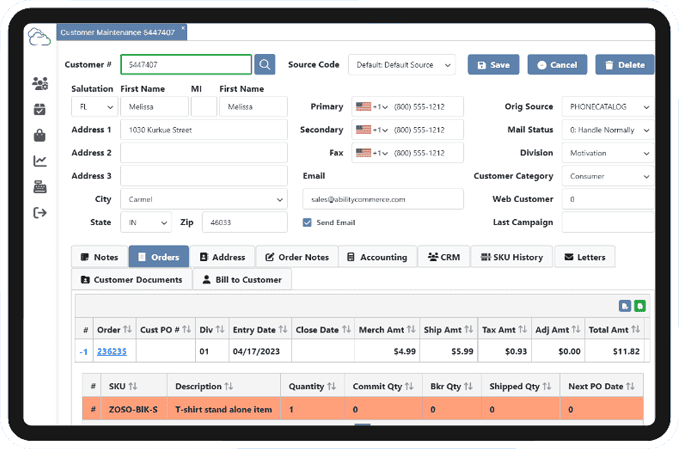
Ability OMS integrates with web stores, marketplaces, call centers, and back-office systems, acting as the system of record for orders and inventory. This separation allows retailers to evolve front-end experiences without disrupting core operational workflows.
Ability OMS works alongside existing platforms rather than forcing a one-size-fits-all replacement.
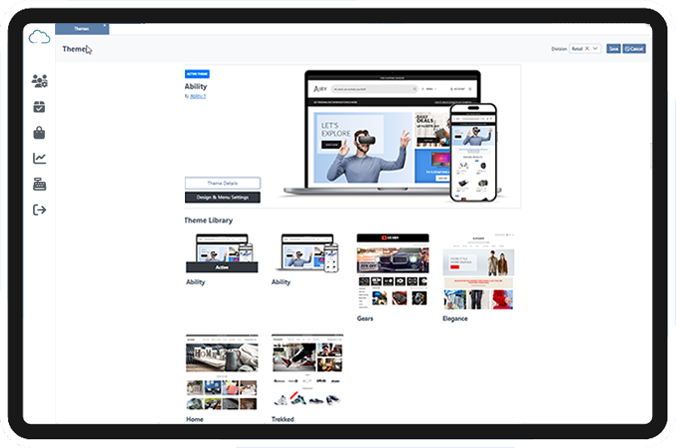
Ability OMS includes capabilities such as:
- Payment processing and reconciliation
- Tax calculation integrations
- Reporting and operational insights
- APIs for third-party integrations
These capabilities ensure that order data remains accurate, auditable, and aligned across finance, operations, and customer service.
Ability OMS integrates with tax engines such as TaxCloud to calculate accurate taxes at the time of order, ensuring compliance across jurisdictions while reducing manual reconciliation. This integration supports high-volume, multi-state, and multi-channel selling environments.
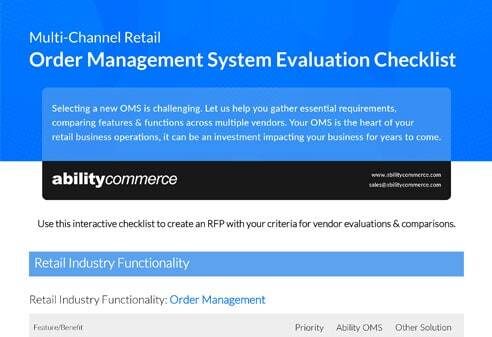
simplifies the OMS search process.
See what our OMS
can do for you!
An Order Management System is software that manages the entire lifecycle of an order — from capture and inventory allocation through fulfillment, invoicing, and reconciliation.
When does a business need an OMS?
A business typically needs an OMS when it manages multiple sales channels, shared inventory, backorders, split shipments, or complex fulfillment workflows that exceed the capabilities of basic eCommerce platforms.
How is an OMS different from an eCommerce platform?
An eCommerce platform focuses on storefront and checkout. An OMS focuses on operational coordination — ensuring orders are processed, fulfilled, and accounted for accurately across systems.
Does Ability OMS support backorders and partial shipments?
Yes. Ability OMS is designed to manage backorders, partial fulfillment, and split shipments while maintaining full order visibility.
